

Litigation Projects & Referrals
In the late 1970s through the 1980s, few individual law firms had the resources to pursue large toxic tort cases. Gordon developed litigation projects that brought established law firms together to share the substantial time, expense, and responsibility required. By 1984, he supervised and coordinated more than 24 firms representing over 30,000 individual plaintiffs in multiple jurisdictions from coast to coast, including the Republic of the Marshall Islands.
Gordon’s role now focuses on developing the medical, scientific, factual, and other documentation necessary to fully evaluate each potential claim. He then determines where the claims can most effectively be pursued and which trial counsel with demonstrated expertise in that particular area of litigation is best suited to try the case. Depending on that assessment, Stemple Law may then litigate directly or work with other trial counsel.
When a matter is referred to or handled jointly with another law firm, the client is advised in writing of both the involvement of other counsel and the financial arrangement between the attorneys. Both must be approved by the client. Any division of fees between attorneys will not increase the contingency fee charged to the client and will comply with California Rule of Professional Conduct 1.5.1.
Litigation history
Naval shipyards — Long Beach, Mare Island, Hunters Point
Our firm filed individual asbestos cases for over 4,000 current and retired workers at the Long Beach, Mare Island, and Hunters Point Naval Shipyards in California. Collaborating with several esteemed firms, we constituted 25% of all asbestos lawsuits in the United States as of August 1982—the day Johns Manville, the largest asbestos product manufacturer, filed for Chapter 13 Bankruptcy Protection. This pivotal case and Gordon’s involvement in it, along with other nationally known asbestos attorneys, set the groundwork for today's asbestos trust funds, allowing victims to sue both non-bankrupt entities while still presenting claims to these trusts.
The Marshall Islands Atomic Testing Litigation Project
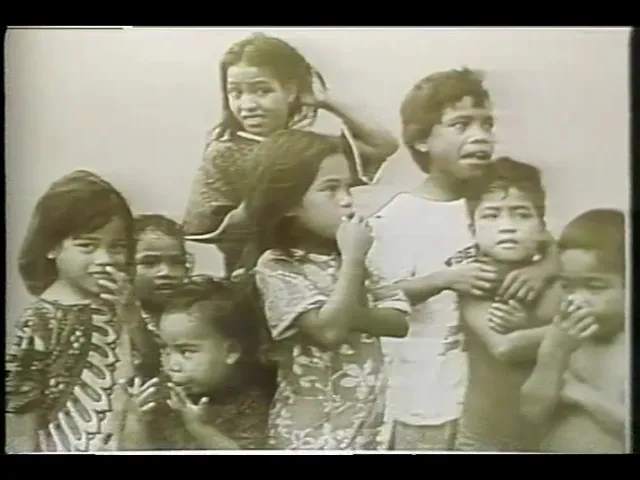
We represented over 3,000 individual Marshall Islanders with personal injury claims and approximately 13,000 with property-taking claims arising from U.S. nuclear testing program in the South Pacific. The litigation addressed whether Fifth Amendment constitutional protections applied to residents of the Trust Territory of the Pacific Islands, then a U.S. protectorate.
Before committing to such a substantial undertaking—one he knew would cost millions of dollars—Gordon made two exploratory trips to the Marshall Islands. The first was to understand the local political and judicial systems. Although the personal injury and wrongful death claims would be litigated in U.S. Federal District Court, and the property-taking claims in the U.S. Court of Claims, Gordon needed to know that an American legal team could work effectively and move freely within what was then the Trust Territory of the Pacific Islands. Most importantly, he wanted to meet the people who had been harmed.
On his second trip, Gordon was accompanied by Ruben Merlis, M.D., a physician licensed by the Atomic Energy Commission to work with radioactive isotopes. Dr. Merlis examined many of the people exposed to nuclear fallout and was the first American physician not associated with the U.S. nuclear testing program to examine them. The harm suffered by this kind, gracious, and trusting people was tragic. After returning, Gordon prepared a slide presentation for a gathering at the Los Feliz home of attorney Richard Voorhies, formerly the home of Walt Disney. The presentation was shown in Disney’s home theater. Among those attending were Richard F. Gerry of San Diego, Scotty Baldwin of Tyler, Texas, Fred Baron of Dallas, Texas, and other nationally recognized trial attorneys, representing twelve law firms in all. At the conclusion of the presentation and questions, every firm present agreed to participate. That was how MIATLP began.
Describes Stemple as having led a consortium of U.S. lawyers, the Marshall Islands Atomic Testing Litigation Project, that filed $5 billion in lawsuits against the United States. Credits that campaign with helping to increase the final $270 million settlement to the Marshalls after the Compact forced dismissal in 1986.
Survivors of Rongerik
We represented five U.S. Air Force weathermen exposed to radiation following the March 1, 1954, Bravo test, the first hydrogen bomb test. They were among 28 weathermen stationed on Rongerik Atoll, approximately 150 miles downwind of the detonation on Bikini Atoll. Their assignment was to monitor wind direction and report to the commander of Joint Task Force 7 so he could determine whether conditions were safe for detonation.
In 1980, Gordon asked trusted private investigator, John Sample, to locate the men. Of the 28, Sample was able to locate only five who were still living. They met with Gordon and several other attorneys at Robert Cartwright’s San Francisco office. Each of the five had developed a form of cancer consistent with exposure to nuclear fallout.
During the privileged attorney-client interviews, the men described what had happened on the morning of the Bravo test. They said their group radioed the task force that the wind was blowing directly toward inhabited islands and atolls, including their own location. Despite the warning, the order was given to detonate. The men also said the military had required them to sign nondisclosure agreements prohibiting them from revealing what had occurred.
Representing the men presented substantial legal obstacles. The Feres doctrine generally bars members of the military from bringing claims against the United States for injuries arising from military service, and the Federal Tort Claims Act does not permit punitive damages against the United States. Claims against government contractors presented separate issues, including assertions of the government-contractor defense.
At the next meeting of MIATLP co-counsel, these difficulties were discussed in detail. Fred Baron volunteered: “My office is willing to represent these men.”
In time, each of the five cases was resolved. The settlements required that their terms remain confidential. None of the co-counsel objected.
The Toxic Substance Litigation Group
We litigated against multiple manufacturers of 1,2-dibromo-3-chloropropane (DBCP), a chemical originally designed as a nerve agent for use in war, then repurposed for agricultural application after University of Hawaii scientists discovered it sterilized nematodes, small worms that damage crops grown in sandy soils, such as pineapples.
The defendant chemical companies claimed Gordon was unreasonably causing our clients to experience emotional distress. The trial court and Court of Appeal agreed. In a landmark unanimous decision, the California Supreme Court disagreed and reversed the prior decisions. To learn more about what the fight was all about, review the unanimous California Supreme Court’s decision in Mitchell v. Superior Court paying particular attention to the final two paragraphs of the opinion referenced below.
“… Such a holding would potentially uphold a harassment tactic whereby defendants such as these are able to shift the focus of the case from the damages caused by chemical pollutants to the damages caused by allegedly inflammatory or false information provided by self-serving attorneys… Once again, this technique not only obfuscates many of the substantive issues in a case, but also frequently places the wrong ‘defendant’ on trial. Quite simply, such tactics should not be tolerated in the courts of this state…” Mitchell v. Superior Court, 37 Cal.3d 591, at Pages 610, Para 4, L 2 – 4 and 611, L 3 – 5
In short, the chemical company defendants tried to shift responsibility for the harm caused by their own products onto the very lawyers representing the people they harmed.
The Crazy Horse Landfill Case

In the Crazy Horse landfill case, we secured a then-record monetary award for two families living in Prunedale whose groundwater was contaminated by toxic waste illegally disposed of there from the then closed Firestone manufacturing facility in Salinas, CA. Because none of the family member plaintiffs had manifested a physical injury, this was a fear-of-cancer case arising from their exposure to the contamination. At the time, it was the highest court verdict in the nation in a landfill contamination case. The California Supreme Court’s later review in Potter v. Firestone, 6 Cal. 4th 965, reduced and remanded the damages, and the matter resolved for an undisclosed amount.
National Tire Workers Litigation Project
Gordon discovered an epidemic of asbestos-related illnesses among American tire manufacturing workers in 1985, when testing workers for chemical exposures from the then closed Firestone factory that had been disposing of its waste at the Crazy Horse landfill. Despite strong resistance and disparagement from both the tire and asbestos industries, our firm represented approximately 13,000+ tire workers, coast to coast, exposed to asbestos. The industrial talc hazards, used in abundance in tire factories, once vehemently disputed, are now widely accepted as dangerous.

Tobacco Victims Law Center
We worked with other law firms to pursue claims against the five major cigarette manufacturers, seeking recovery for healthcare costs incurred by the Republic of the Marshall Islands in treating smoking-related illnesses among its citizens. The litigation was among the first to require those companies to defend their conduct in a jurisdiction outside the United States or the United Kingdom.
Lead attorney Gordon Stemple: “We’re not looking for a settlement from the tobacco companies. We’re taking this to trial to win.”
Other toxic substance cases
Homeowners’ insurer after Potter
A first-party claim on the same contaminated house. The house and land were worth about $250,000. Demand letters went to the carrier. An adjuster later testified that they were placed in a file marked CGU — “Client Gave Up.” The company’s own counsel had opined that the claim should be paid. A jury returned a $5 million punitive verdict.
Class Action to Lower Formaldehyde Emissions
We brought a class action in California against major mobile and prefabricated housing manufacturers, alleging that excessive levels of formaldehyde emitted from laminated wood used in their construction were causing purchasers to suffer severe allergic reactions.
The case was settled. The manufacturers subsequently agreed to lower formaldehyde emission levels in housing sold in California.
Airborne Exposure to Pesticides (VOCs, PAHs & DDT)
Four law firms represented approximately 200 people living in a northern California suburban community exposed to hazardous pesticides by way of air drift. Many residents had cancer.
Asbestos Exposure
Four law firms litigated on behalf of more than 100 California Superior Court staff members exposed to asbestos during remediation operations.
Toxic Mold Exposures
Six law firms represented 55 professional government employees assigned to a fraud investigation unit who were exposed to toxic mold in a privately leased building used as their office space.
Acute Benzene Exposure
Four law firms joined together shortly before trial to represent a professional flight controller who suffered debilitating brain damage following a single acute benzene exposure. The exposure occurred when an HVAC system in an occupied government building was cleaned with the solvent while the system remained in operation.
Breast Implant Project
About 200 clients, mostly in California. The project closed in 1995.
Silicosis
One of the silicosis matters Stemple Law is currently working on involves two former business partners who cut manufactured stone countertops containing quartz and silica to fit sinks and faucet openings.
One of the men is now severely ill. His former partner, who did the same work, has died. Stemple Law is investigating whether their years of exposure to crystalline silica dust contributed to their devastating illnesses.